
IF the building needs it,
THEN we automate it.
10+ years across Delta Controls, Automated Logic, and Schneider Electric systems: retro-commissioning, data dashboards, system upgrades and additions, after-hours calls, and tenant billing. Based in Madison, serving facilities across Southern Wisconsin.
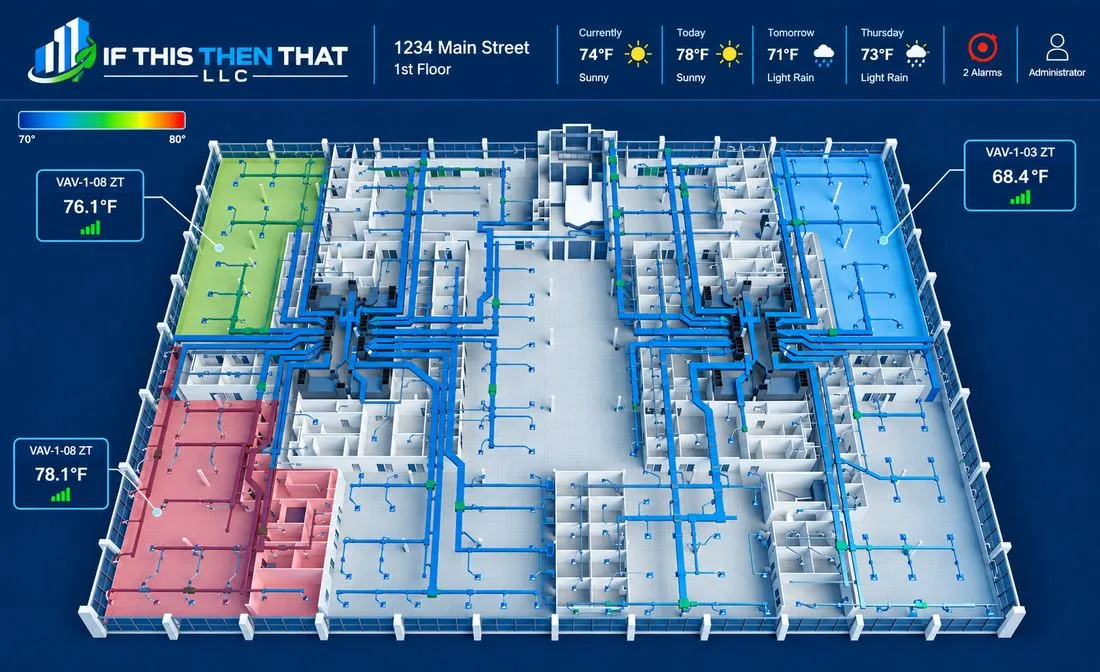
Built for the building operator who keeps it running
Facility and operations managers keeping HVAC, lighting, and access control running day to day. Building owners and energy managers watching costs and system performance. Maintenance and engineering teams chasing down alarms and troubleshooting faults before they turn into work orders. Whoever's responsible when comfort, safety, or uptime is on the line, that's who this is built for.
More of the building than you'd expect
Building automation reaches further than the mechanical room. It shows up in comfort, energy, safety, and the everyday experience of being in the space, usually more of it than people realize, and it's typically all tied into the same system underneath.
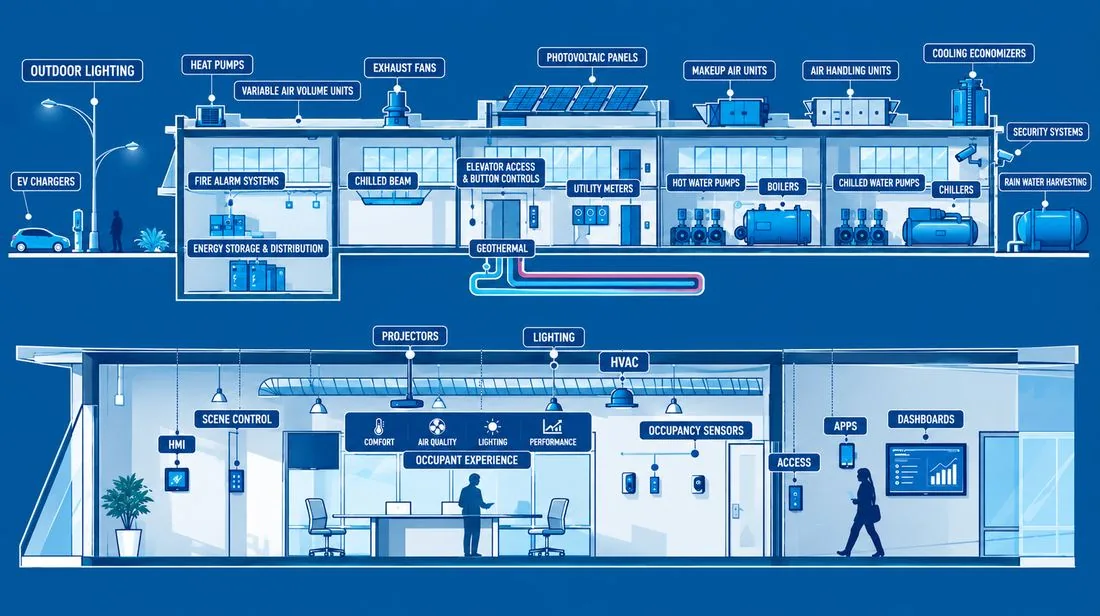
All of it lands in the same dashboards, with tenant billing built on top, whether the platform underneath is Delta Controls, Automated Logic, or Schneider Electric.
Where to Start
Every engagement starts with a free 30-minute consultation to talk through symptoms, or a 2-hour minimum on-site walkthrough for the full picture. Either way, here's what tends to turn up: points overridden and forgotten, schedules stuck at commissioning defaults, alarms nobody trusts anymore, sensors drifting out of calibration, and graphics that don't match how the building's actually used.
THENa system audit finds out what's actually going on
On-site, 2-hour minimum, full review of points, trends, and sequences, not a rushed walkthrough. Larger or more complex systems take longer, and that's fine.
THENretro-commissioning brings it back to design intent
A structured pass through sequences, setpoints, and equipment staging to close the gap between how the system was designed to run and how it's actually running today.
THENa maintenance contract keeps it tuned before it becomes a problem
Scheduled visits and remote checks that catch drift in setpoints, schedules, and sensors before they turn into a comfort complaint or a service call.
THENan upgrade or addition brings it current
New features and active support for outdated platforms like enteliWEB, WebCTRL, or SmartStruxure, or new points and equipment integrated cleanly into what's already there.
THENenergy optimization retunes it to match how the building's actually used
Schedules, setpoints, and sequences adjusted to real occupancy, not the defaults left over from commissioning.
THENa data dashboard puts the numbers where people can see them
Energy use, alarms, and equipment status pulled into a dashboard built for whoever's watching, from a chief engineer to a property manager.
THENsubmetering and tenant billing puts real usage behind the invoice
Metering integrated into the BAS so utility costs get allocated by what each tenant actually uses, not a flat split.
THENemergency support gets it back online
That's what the after-hours line is for. A system down overnight doesn't wait for business hours.
Tune it before it breaks, not after
Most facilities that move from reactive repairs to preventive maintenance see real reductions in cost and downtime. It's a pattern well documented across the facility-maintenance industry, not a promise tied to specific results.
Rooted in Southern Wisconsin
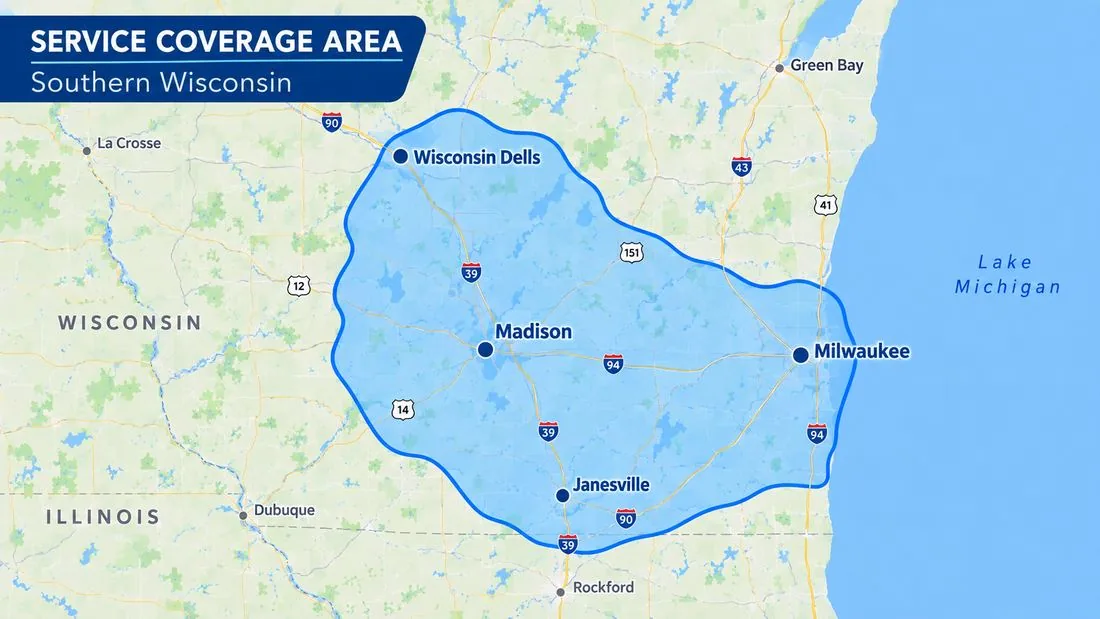
Working commercial and institutional sites from Madison out to Milwaukee, Janesville, and everywhere between. Farther out is a conversation, not a hard line.
Have a building automation system that needs a second set of eyes?
Send a note with the site, the building type, and what's going on, or nothing at all if you're not sure yet. That's what the audit is for.